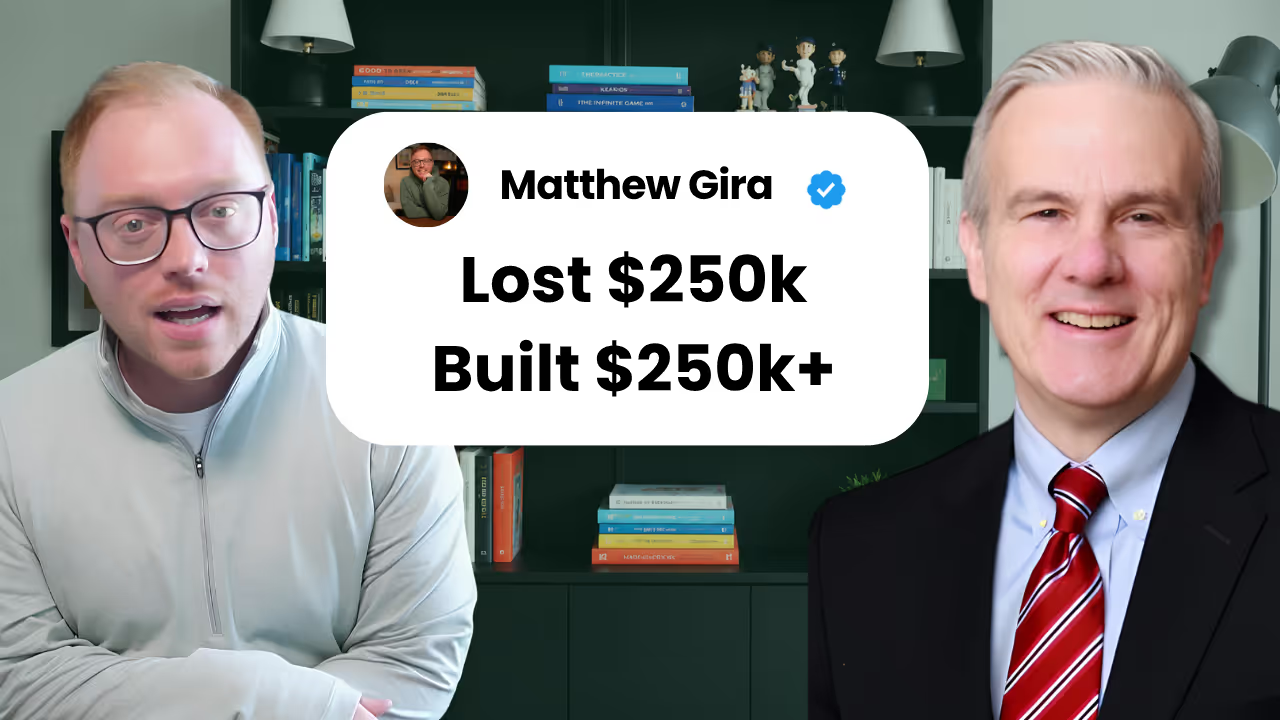
How Losing $250,000 Led to a $250k Business

If I told you just a few key moments built an entire business, would you believe me?
Today, Creative Senior Planning is a software that helps manage the entire backend of senior care facilities and does over $250k in annual revenue.
From how the cofounders Jay and David met, to the couple of times that 99% of people would have quit, to having one particular group partner with them, the story of Creative Senior Planning is not only an incredible story of perseverance but also a story of how to build an efficient revenue strategy.
So without further ado, let’s jump into how Creative Senior Planning went from $0 to $250k in annual revenue.
Before Creative Senior Planning
Jay started his career with what seemed like a great, standard lawyer career and life. He was a lawyer at a large firm for 20 plus years and life was pretty good.
But then Jay worked with one particular customer, David Osthus, who helped manage senior care facilities in Iowa.
David was a client of Jay’s law firm and worked closely with Jay while he was there, particularly on one case where a family member was stealing money from their mom that was supposed to be paying for their senior care.
From this case, David approached Jay about him leaving the law firm to be more internal for his businesses and to start on a new business idea based on their experience with that particular legal case.
The start of Creative Senior Planning
That new idea? It was to essentially put Jay out of work.
This idea that David and Jay came up with was building a software that could check if someone had the funds ready to go to pay for senior care. That way, everything runs smoothly and a lawsuit between any party isn’t needed because they were proactive with it.
One major problem: neither Jay nor David were techies. They can make a computer function, but building software wasn’t their forte.
They ended up asking around about who could potentially help them build it out and ended up landing on a group that they felt good about at the time.
It was a $250,000 investment of their own funds to get the entire software developed by this group.
One issue: this was a team of web developers that they hired, not software builders.
After spending the $250,000, Jay and David still had nothing.
Yet, at Thanksgiving of 2018, they decided they were going to still go for it.
This was after meeting Erin Rollenhagen’s team at People Friendly Tech, another deep dive I’ve done in the past, who showed them what it was actually going to take and how they could do it in a detailed way.
By November of 2019, Jay and David finally had a fully working product.
You can probably guess what’s coming next.
Launching a Senior Care Product During the Pandemic
As they were launching their product at the start of 2020, they had hired a team, and were excited to get started. By March of 2020, they couldn’t even make a sales call. There was no point.
Even with that, Jay and David continued to double down on this idea.
In some ways, the pandemic made them do something that was actually really beneficial for them: slow down.
Through this four to five month beta testing process during the pandemic, the Creative Senior Planning team learned a lot.
They learned how much of a hassle the Title 19 application process can be, figured out how to prioritize the issues in the back offices of these facilities, and debug their software as the entire way.
I know it’s easy to be impatient in growing a business in the early days, I’ve been there so many times. This is such a great example though of why it’s important to get the bottom of your sales funnel right first and understand all of the actual needs of your customer and then scale up.
If you scale up the top of your funnel without understanding the bottom of your sales funnel, all you’re doing is scaling up a bad experience and product. That’s a waste of time, energy, and resources.
Within that last clip of Jay, he made a very small comment about the Title 19 application. If you’re not familiar, Title 19 is Medicaid. A key part of funding senior care for so many people in the United States. In 2026, over 7 million people in the United States over the age of 65 were actively using Medicaid for healthcare and senior care expenses.
Introducing a Freemium Model
As you might imagine, a senior applying for Title 19 can be a bit tricky because it’s a legal application and having it done online for anyone senior isn’t always ideal.
Whether or not they plan to use Medicaid, all of the facilities need to confirm whether or not these seniors have funding sources to get paid. It can be quite the process with Medicaid, Social Security benefits, personal income sources, or outside family resources. All in all, there’s a lot of different potential funding options for any senior care facility to confirm or not confirm.
What Jay didn’t know until they started talking to customers was that this was their entry way into gaining trust with customers.
Jay originally thought that if they go into these facilities and let them know that they can do all of this payer confirmations for them for under $500 a month that these facilities would immediately sign up.
They didn’t.
They would just say things like “oh well we already do that”.
That’s when their free service for confirming funding came to be.
This free funding confirmation tool builds trust with senior care facilities out of the gate and then with that trust and reliability, it’s so much easier to then say “we can do a lot more” and then get the sale from the facilities. With the pandemic and everything that goes into senior care, having trust with someone is a bigger deal than it might be compared to buying someone’s marketing services or a candy bar at the store.
With this freemium model in place, Jay and David hit $250k in annual revenue 2 years after having their product built out in November of 2019.
Revenue Strategies
So that’s the high level story, but let’s jump into more of the revenue strategies in a deeper way. Here are the three specific main revenue strategies:
Freemium
The first one is a freemium model that we’ve talked a little bit about already.
In a lot of ways, I see this as a great lead magnet. Instead of having a digital download or some other resource, it’s their tool itself essentially. Or at least one part of it.
Having this be their lead magnet leads to them probably never creating a new one ever again. Perks of having a robust, great lead magnet that tackles a clear need for your target customer.
No matter how this free tool is presented, it hits a pain point so strongly for their target market that it opens the door pretty easily. If they’re at an event, sending information about it in an email, or even someone else referring them to a potential customer, it’s a simple pitch.
Partnerships
The second revenue strategy is partnerships. One of the interesting things the Creative Senior Planning team figured out after they got this free tool completed was that it scales really nicely.
And luckily, they found the right partner to scale with them.
With their free funding sources confirmation tool, the Iowa Healthcare Association ended up partnering with Creative Senior Planning to share that to all of their members.
As Jay put it, they share about the free tool quarterly at the association meetings and are in the emails the Iowa Healthcare Association sends out.
The Creative Senior Planning team gets distribution but they also get a stamp of approval from their industry association which I would guess in a lot of ways automatically gets them a lot of trust built upfront in any conversation they have with a potential customer affiliated with that association.
Relationships
This last revenue strategy is relationships. This entire business is probably the classic case of someone being in an industry for a long time, seeing a pretty critical problem, and then building a business to solve said problem.
Jay and David were in this industry for a while before starting Creative Senior Planning. They had gone through all of the litigation and seen this problem first hand.
With Jay’s experience representing groups and David knowing other operators of senior care facilities, it was pretty easy for them to go to those people they already had relationships with and ask, “will you be a beta tester for us?”. Especially if Jay and David had any conversations with them previously about this specific problem they solve with Creative Senior Planning.
Jay told me that this was the main way they got the ball rolling with beta testers, which then led to the freemium model, which then led to the partnership with the Iowa Healthcare Association.
This entire revenue strategy stack is such a great model for how revenue strategies can work together seamlessly and not be much additional work in the end. It’s simple, efficient revenue strategies rather than trying every single strategy under the sun.